Tuesday, January 23, 2007


Monday, December 04, 2006
Blog list
A short list of the blogs I have created:
http://www.businesshackers.com
http://neuralmarkets.blogspot.com/
http://triptorome.blogspot.com/
http://triptoaarhus.blogspot.com/
http://www.businesshackers.com
http://neuralmarkets.blogspot.com/
http://triptorome.blogspot.com/
http://triptoaarhus.blogspot.com/
Site recommendation: Businesshackers.com
The site I would like to suggest visiting has little to do with this website, but I hope you will find it useful: www.businesshackers.com
Friday, September 01, 2006
Major events in Rome... september...
European Frisbee Freestyle Championships type: sport
This weekend sees the European Frisbee Freestyle Championship taking place at the Corallo Beach resort in Ostia (Lungomare Amerigo Vespucci, 112). The best freestylers from across Europe will compete 2 divisions; Open Pairs and Open Co-op (3 persons team). Over 50 players from Sweden, Denmark, Holland Germany, Switzerland, France and Italy will be throwing their plastic disks down on the beach. On Sunday there will also be a demonstration by some of the top American Players. The freestyle routines will be 4 or 5 minutes long and feature creative, artistic and athletic moves with flying discs choreographed to music. Entrance to the event is free, on Saturday the action begins at 9 a.m. and ends with a party complete with Frisbee freestyle shows and disco. Sunday begins at 10.30 a.m. with a cocktail party.
Corallo Beach - Lungomare Amerigo Vespucci, 112
from 02/09/2006 to 03/09/2006
I Concerti del Tempietto alla Casina delle Civette type: Concert
Casina delle Civette di Villa Torlonia
from 12/08/2006 to 03/09/2006
Concert "aspettando la notte bianca" type: Concert
8 September in Piazza di Siena 21.30 , with Pino Daniele, Elisa, Ivano Fossati and Fiorella Mannoia
Piazza di Siena
08/09/2006
COSMOPHONIES 2006 type: Concert
Teatro Romano di Ostia Antica
from 16/06/2006 to 08/09/2006
I Concerti del Tempietto al Teatro di Marcello type:
Parco Archeologico del Teatro di Marcello
from 08/06/2006 to 01/10/2006
Moonlight Station type:
Eliseo Theatre
from 01/05/2006 to 31/12/2006
Tersicore - new spaces for dance type:
In February at the Conciliazione Auditorium will start TERSICORE, event that will bring on the Roman scene the most presigious names of the contemporary choreography, as Sylvie Guillem, Pilobolus Dance Theatre, Ballet Preljocai, Merce Cunningham Dance Company, and the emerging Italian company conducted by Mvula Sungani.....
Conciliazione Auditorium (Rome) - Valle Theatre (Rome)
from 10/02/2006 to 14/01/2007
Guided Tours by night at Ara Pacis in Rome
Museo Ara Pacis - Via Lungotevere in Augusta
dal 25/07/2006 al 07/09/2006
Poetry illustrations of Goethe
On display a masterpiece of impressionist book ilustration: the lithographs for a selection of poems by Goethe on the publishing house Paul Cassirer, published in 1924-26. Artists: Andreu Alfaro, Ernst Barlach, Max Liebermann, Hans Meid, Karl Walser.
Closed Mon, h 10-18, Int 3 €, Rid 2 €
La Casa di Goethe, Via del Corso, 18
dal 09/06/2006 al 10/09/2006
Shangai Blues
The exhibition presents a rich selection of works. Watercolours which time has seen profitably used to illustrate literary works from Shakespeare to Sylvia Plath, from Derek Walcott to Su Ling. Includes the latest created in2006, to the intersecting, musical rhythm of John Cage's story. Artist: Elissa Montessori.
h 8.30 - 19 Closed Mon INT 9 €
Galleria Nazionale di Arte Moderna, via Aldovrandi, 1
dal 09/06/2006 al 10/09/2006
Galileo Chini
The exhibition includes more than 200 pieces, and celebrates this important Florentine artist 50 years since his death by following all the stages of his intense and varied activities. For the first time, we can explore his entire work in one sitting, from large-scale decorations to painting, from ceramics to glass, and to work for theatre. Closed Mon, Int 9 €
Galleria Nazionale di Arte Moderna, via Aldovrandi, 1
dal 09/06/2006 al 10/09/2006
Raffaello from Florence to Rome
Containing over 60 pieces, this exhibition investigates Raffaello Sanzio's work in the years 1505 to 1508 when he was close to moving to Rome.
During this period he painted "Desposizione" conserved at the Borghese Gallery and which laid th way for the revolutionary passing from tradiitonal structural composition to the concept of dynamic space which apperared with the Vatican Room's frescoes.
Museo di Villa Borghese - sera
dal 19/05/2006 al 10/09/2006
La Samaritana Al Pozzo
Palazzo Braschi - Museo di Roma, P.zza S. Pantaleo, 10
dal 07/07/2006 al 10/09/2006
Al Vittoriano I Paesaggi Italiani
Vittoriano
dal 02/02/2006 al 20/09/2006
The Women of Trastevere
This interesting photography exhibition illustrates life in Trastevere, one of Rome's oldest and most popular neighbourhoods, in the seventies by way of the women who lived there in that period.
Emilio Gentilini walked the cobble-stoned alleys and squares, and documented all he saw, and above all the women who made Trastevere their home, their territory.
The Museo di Roma in Trastevere (Piazza Sant'Egidio 1b) hosts the exhibition, which runs till September the 24th, and is opene from 10 a.m. till 8 p.m. (last admission at 7 p.m., from Tuesday.
Admission costs €5,50 and includes admission to the museum (concs €4).
Info: 06.52059127
Trastevere - Piazza Sant'Egidio 1b
dal 19/07/2006 al 24/09/2006
Marc Quinn and Christian Boltanski
The space hosts a large scale, site-specific installation (filling one of the gallery's 1000 square metre pavilions entirely) by the French artist, Christian Boltanski.
300 hanging items of clothing descend from ceiling, recorded voices are played from loud -speakers, historical events are projected on transparent walls, and pulsating light illuminates glass cabinets.
< Its also the first personal exhibition by one English artist to be presented in an Italian museum. It puts together over 30 pieces that have the human body as their theme:its transformations, conservation, survival and fragile beauty. One of the Young British Artists most controversial members, Marc Quinn often works with organic substances like blood, placenta, DNA and milk:elements that help increase his work's expressivity.
MACRO - Museo di Testaccio
dal 21/06/2006 al 30/09/2006
Museum Carlo Bilotti e la mostra Damien Hirst, David Salle, Jenny Saville
The Carlo Bilotti museum hosts part of the amazing collection that the magnate of the same name donated to the city. The best represented artist is De Chirico, but alongside his paintings we can find a large Giacomo Manzù cardinal bronze, and a double portrait of Bilotti's wife and daughter. There is also an exhibition of Hirst, Salle and Saville in the Bilotti Chapel. This series of large format pieces sets out to "create an exhibition space that's more mental than physical: an environment for meditation in the widest sense, than can put you in a good mood, or a bad one". Closed Mon, h 9-19 ,Int 6 €, rid 4 €
Museo Carlo Bilotti all
dal ... al 10/10/2006
Baroque Rome:Bernini, Borromini, Pietro da Cortona
An exhibition of large models of the most important Baroque works in Rome, including both those that were completed and those that remained on the drawing board. The exhibition passes from architecture to decorative arts, from music to science, and features some of the period's most important artists, such as Bernini, Baciccio, Borromini and Pietro da Cortona.
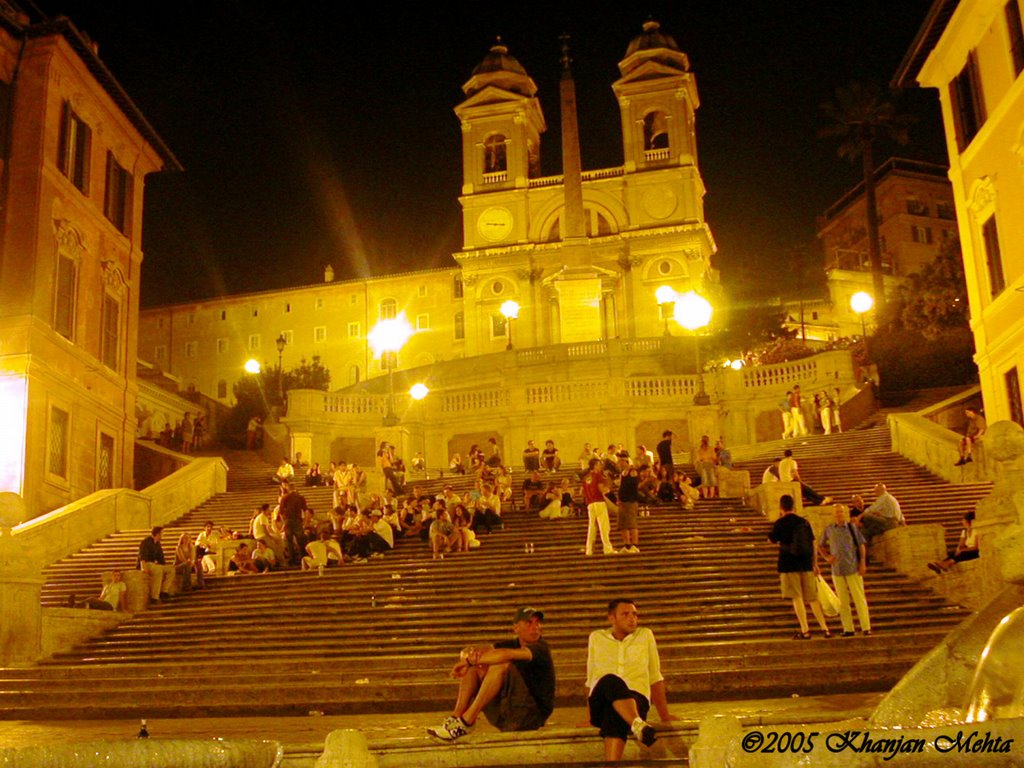
CASTEL SANT'ANGELO
dal 26/06/2006 al 29/10/2006
Henri Cartier - Bresson
Exhibition in two parts, the first containing Bresson's photographs taken in Rome during his various trips to the capital, the second a series of his portraits.
Museo di Roma - Palazzo Braschi
dal 31/05/2006 al 29/10/2006
Wednesday, August 16, 2006
Help Trip to Rome...
if you appreciate the efffort i put into this blog please link to:
http://triptorome.blogspot.com (without www)
or add this site to social bookmarks including delicious, flur, etc.
thanks for your help
http://triptorome.blogspot.com (without www)
or add this site to social bookmarks including delicious, flur, etc.
thanks for your help
Sunday, August 13, 2006
How to behave in Rome...
Italy has a reputation for being warm and welcoming. Here are some general comments on Italian culture, and some tips for adjusting to Italian manners and standards. Obviously this is mostly based on personal experiences; generalisations of course do not always hold true.
When in Rome...
Greetings
Italians greet friends with two light kisses on the cheek, first the right and then the left. Even if you're merely acquaintances, this form of greeting is usual, both on arrival and departure. When groups are splitting up, expect big delays as everyone kisses everyone else. On first introduction a handshake is usual, although not necessarily the firm businesslike shake other nationalities may be used to.
Foreign reserve
If your inbred cultural reserve makes you feel uncomfortable with this, don't worry too much. The British in particular have a reputation for being reserved, so you can always play up to this expectation, and Italians will understand you don't mean to be rude. Handshakes are also accepted greetings, and some Italians will kiss compatriots and offer their hand to the awkward Brit.
Shops
In a small-medium sized shop, it's standard to greet the staff as you enter, not when you approach the counter to pay. A friendly 'Buongiorno' or 'Buonasera' warms the atmosphere. When paying, we've found that staff usually expect you to put coins down on the surface or dish provided, rather than placing money directly into their hands (fear of germs? money-handling etiquette?), and they will do the same when giving you your change (il resto). The advent of the euro has caused problems for the Italians. Most lira transactions were in banknotes, and people are still adjusting to the fact that coins are now of significant denominations and in general use. Don't be surprised to find the whole issue of change rather perplexing for cashiers, who may try to insist you give them complex combinations of coins and notes rather than simply changing your notes.
Making friends
To make friends, it's a good idea to pay some compliments. Most Italians still live in their town of origin and feel far more strongly about their local area than they do about Italy in general. Tell them how beautiful their town/lake/village/church is - and possibly add how much you prefer it to Rome/Milan/other Italian towns. Residents can be founts of knowledge regarding their local monuments and history, and a few questions will often produce interesting stories.
Clothing
Whole essays can be written about the Italians' relationships with clothes (maybe a future addition to this site...). Three of the most important observations:
1. Italians are very conformist about clothing; everyone wears the same fashions, from teenagers to grans (this can take some getting used to... see comment 2 below). Don't be surprised or insulted if you are looked at askance for your 'eccentricity' in not wearing the latest customised jeans or fiendishly-pointed boots.
2. It's important not to judge people in return by their choice of clothing. Styles do not necessarily carry the same connotations in Italy that they would in Britain or some other countries. A women in fishnets, stilettos, miniskirt and caked makeup at eight in the morning is probably just going to work in a bank. Almost all youths lounge about in skin-tight t-shirts and casually-knotted knitwear (and are very perplexed by the response they get when they take their sense of style and grooming to a less 'sophisticated' climate).
3. Sometimes clothing rules are written. To visit a church or religious site you will need to cover yourself up; no bare backs, chests, shoulders and sometimes no knees. Sometimes museums and other attractions can also be strict; no bathing costumes, for example. If you want to visit a church or religious site it's a good idea to take something to cover yourself up with; for example a jumper or large scarf. Some churches supply cover-ups, e.g. sarongs are loaned to men with shorts so that they can modestly conceal their legs. Even where there are no written rules, it's worth noting that bare chests and large expanses of sunburnt skin aren't really acceptable away from beaches or sunbathing areas, whatever the temperature.
Advice for women
Sexual harassment is not regarded in the same way in Italy as in English-speaking countries. The general atmosphere is pretty unreconstructed, and women should be prepared for attention. However, the tone of this 'attention' is generally less aggressive than you may be used to. Men will call out compliments such as 'bella' (beautiful) instead of muttering crude suggestions. And culturally, these comments are not seen as insults; if you respond angrily or insultingly everyone will be very surprised. Whereas women of other nationalities may be used to telling strangers (in no uncertain terms) to shut up and go away, in Italy the norm is to ignore the attention. In any case, responding in English or in imperfect Italian will only encourage more attention. It's best to do as the Italian women do, and sail past with your head held high. If you avoid eye contact and don't respond, you are extremely unlikely to be pursued or hassled further.
(source)
Summer in Rome...
For those who can cope with the heat, summer in Rome is a rich and culturally exciting time. Every year there are outdoors festivals, concerts, parties, operas and ballets. The choice is wide and varied.
Events and organisations vary from year to year. The big umbrella organisation is the Estate Romana (Roman Summer), which co-ordinates a host of different initiatives run by various organisations. Their website (see right-hand panel) gives a comprehensive calendar of events.
Every year the Teatro dell'Opera di Roma, the Rome Opera House, puts on a summer season in the open air. This usually takes place in the spectacular surroundings of the Baths of Caracalla, and consists of at least one opera and a ballet, running from early July to early August. For this year's productions see our Teatro dell'Opera page.
Recent summer highlights have included: the ballet Swan Lake (Lago dei Cigni) at the Baths of Caracalla; dance festival Invito alla danza at Villa Massimo; evening music and events at Castel Sant'Angelo; drama and music at the Roman theatre of Ostia Antica, organised by Cosmophonies and the Festival Euro Mediterraneo, which puts on high-profile musical events at the ruins of Villa Adriana.
Finally, a note about summer in the city. Rome has a curious summer character. Italians tend to take the whole of August off, and disappear to the sea, mountains, or overseas. Businesses close down; outside the centre it can be hard to find shops open as the big holiday of Ferragosto (15th August) approaches. The majority of theatres, cinemas and nightclubs close between June and September. Some move to outdoors venues, some relocate to the busy seaside of Ostia. From May onwards the roads and trains to Ostia become packed with locals desperate to be by the sea. The advantage of the August exodus is that tourists may find they have the town to themselves. The metro empties as commuters flee the city.
June is known for stifling heatwaves; made worse by the fact that the city is still crowded. In 2003 temperatures rose so high throughout Italy that the electricity authority was forced to impose temporary blackouts, as excessive use of air conditioning units and fans ate up the country's electricity supply. The Rome weather in July and August can be variable; with occasional rainstorms forcing the cancellation of outdoors events.
On the hottest summer days it can be hard to find the energy to move around the city streets between 11am and 5pm. Outside these peak hours, the temperature is more bearable. On the plus side, sun-lovers will bask in the long hours of warmth, while warm evenings in Rome are one of the city's pleasures. It should be remembered, too, that Rome is used to coping with the heat. There are plenty of shady parks where you can rest, hundreds of drinking fountains where you can quench your thirst, cafe-tables under awnings where you can cool down with a refreshing ice-cream. If you make sure you don't overdo things in the hottest part of the day (visit an air-conditioned museum, for example, or plan a trip to the cooler hills outside Rome) then you should enjoy your trip to Rome nonetheless.
One more quick word of warning: the biggest nuisance after the heat is the small but dastardly zanzara mosquito. These little devils hang out where there is shade and water, and if your skin is sensitive to their bites you will spend your holiday cursing them. Plan ahead: pack insect repellent; buy an anti-mosquito plug-in, take extra B vitamins. Green tea skin products, eating garlic and drinking tequila are other suggested remedies.
(thanks to:site)
Friday, August 04, 2006
Piazza Esedra...
it is the previous name of Repubblica Square is at the beginning of Nazionale Street, one of the main roads of Rome.
Within walking distance from Coliseum, Emperial Forum, Spanish Steps, Navona Square, Villa Borghese, Trevi Fountain, you can take the Metro, at adjacent Station "Repubblica" (30 meters), to reach Saint Peter's Church in 10 minutes.

Within walking distance from Coliseum, Emperial Forum, Spanish Steps, Navona Square, Villa Borghese, Trevi Fountain, you can take the Metro, at adjacent Station "Repubblica" (30 meters), to reach Saint Peter's Church in 10 minutes.
Friday, July 21, 2006
nice museums you should absolutely visit
This is a short list of nice museums you should absolutely visit while visiting Rome...
# Museums in Rome - from Musei Online, a comprehensive guide to museums in and around Rome, from the world-renowned to the utterly obscure.
# Museums of Rome - a list of Museums with brief descriptions.
# Thais - Index of Museums - a list of museums with brief descriptions and opening hours.
# Thais - Scupltures by Museums - a list of museums with pictures and descriptions of the most important sculptures in it.
# Galleria Borghese - the original sculptures and paintings in the Borghese Gallery date back to Cardinal Scipione's collection, the son of Ortensia Borghese - Paolo V's sister - and of Francesco Caffarelli, though subsequent events over the next three centuries entailing both losses and acquisition have left their mark...
# Rome Guide - Galleria Borghese - RomeGuide offers a virtual tour of this Baroque show of force: the Villa Borghese. Note that tickets to the gallery must be booked in advance.
# Galleria Colonna - the construction of the Galleria Colonna was begun by its founder Cardinal Girolamo Colonna I, in 1650, and continued by his nephew High Constable Lorenzo Onofrio, from 1666 on, to house the family's celebrated art collection...
# Galleria Spada - one of Rome's prettiest palaces, it was acquired by Cardinal Spada in 1632. It's most famous feature is Borromini's ingenious trompe l'oeil colonnade in the garden, which is 9m long, but appears much longer...
# Galleria Corsini - the collection, formed in the XVIII century, although composed from various sources mostly originating from the Corsini family...
# Palazzo Barberini (Galleria Nazionale d'Arte Antica) - Maderno, Bernini and Borromini all contributed to the design of this palace, built for one of the Barberini popes between 1627 and 1633...
# Galleria Comunale d'Arte Moderna e Contemporanea (italian) - an example of industrial archeology, this ex-brewery is a sign of the council's interest in new art.
# EUR - atonomous board for the universal exhibition of Rome : events, exhibitions...
# Keats-Shelley Memorial House - situated on the Spanish steps, the house is part of Roman Folklore. For generations the Piazza di Spagna has been visited by architects, painters, musicians and poets who all lodged here. Tobias Smollet, George Eliot, Goethe, Coleridge, Shelley, Byron, the Brownings, Henry James, Edith Wharton, Oscar Wilde and Joyce were just a few of the many who were attracted and inspired by the celebrated 'centro storico'.
# Chiostro del Bramante - situated in one of Rome's most suggestive corners, it hosts high quality exhibitions. Often open at night.
# Palazzo delle Esposizioni - Rome's most important cultural center: it hosts exhibitions, film festivals and conferences.
# Palazzo Ruspoli - the palace of the Ruspoli family is now used for world touring exhibitions.
# Museo del Corso - located in 320,Via del Corso. (Italian)

# Museums in Rome - from Musei Online, a comprehensive guide to museums in and around Rome, from the world-renowned to the utterly obscure.
# Museums of Rome - a list of Museums with brief descriptions.
# Thais - Index of Museums - a list of museums with brief descriptions and opening hours.
# Thais - Scupltures by Museums - a list of museums with pictures and descriptions of the most important sculptures in it.
# Galleria Borghese - the original sculptures and paintings in the Borghese Gallery date back to Cardinal Scipione's collection, the son of Ortensia Borghese - Paolo V's sister - and of Francesco Caffarelli, though subsequent events over the next three centuries entailing both losses and acquisition have left their mark...
# Rome Guide - Galleria Borghese - RomeGuide offers a virtual tour of this Baroque show of force: the Villa Borghese. Note that tickets to the gallery must be booked in advance.
# Galleria Colonna - the construction of the Galleria Colonna was begun by its founder Cardinal Girolamo Colonna I, in 1650, and continued by his nephew High Constable Lorenzo Onofrio, from 1666 on, to house the family's celebrated art collection...
# Galleria Spada - one of Rome's prettiest palaces, it was acquired by Cardinal Spada in 1632. It's most famous feature is Borromini's ingenious trompe l'oeil colonnade in the garden, which is 9m long, but appears much longer...
# Galleria Corsini - the collection, formed in the XVIII century, although composed from various sources mostly originating from the Corsini family...
# Palazzo Barberini (Galleria Nazionale d'Arte Antica) - Maderno, Bernini and Borromini all contributed to the design of this palace, built for one of the Barberini popes between 1627 and 1633...
# Galleria Comunale d'Arte Moderna e Contemporanea (italian) - an example of industrial archeology, this ex-brewery is a sign of the council's interest in new art.
# EUR - atonomous board for the universal exhibition of Rome : events, exhibitions...
# Keats-Shelley Memorial House - situated on the Spanish steps, the house is part of Roman Folklore. For generations the Piazza di Spagna has been visited by architects, painters, musicians and poets who all lodged here. Tobias Smollet, George Eliot, Goethe, Coleridge, Shelley, Byron, the Brownings, Henry James, Edith Wharton, Oscar Wilde and Joyce were just a few of the many who were attracted and inspired by the celebrated 'centro storico'.
# Chiostro del Bramante - situated in one of Rome's most suggestive corners, it hosts high quality exhibitions. Often open at night.
# Palazzo delle Esposizioni - Rome's most important cultural center: it hosts exhibitions, film festivals and conferences.
# Palazzo Ruspoli - the palace of the Ruspoli family is now used for world touring exhibitions.
# Museo del Corso - located in 320,Via del Corso. (Italian)
Tuesday, July 11, 2006
55 attractions anyone would recommend...
Vatican Museums, Rome
The biggest collection of art in the city, including Michelangelo's ceiling of the Sistine Chapel.
Attraction type: Museum; Landmark/point of interest; Religious site; History museum; Art museum
Borghese Gallery (Galleria Borghese), Rome
Attraction type: Art museum; Art gallery
Capitoline Museum (Museo Capitolino), Rome
This museum features the Old Masters of Great Renaissance and Baroque paintings such as Caravaggio, Bernini, Peter Paul Rubens, Rembrandt and Vermeer.
Attraction type: Art gallery; Art museum
Villa Borghese, Rome
Famous villa constructed at the beginning of the 17th century for Cardinal Scipione Caffarelli Borghese, nephew of Pope Paul V, which is surrounded by one of the largest and most beautiful public parks in Rome.
Attraction type: Garden; Art gallery; Art museum; Park
Galleria Doria Pamphilj, Rome
Attraction type: Art museum; History museum
Palazzo Altemps, Rome
This archeological museum features the Ludovisi art collection and many ancient sculptures, frescoes and painted ceilings, gems of the Roman Renaissance.
Attraction type: Art museum; Art gallery
Palazzo Massimo alle Terme, Rome
Built onto the ruins of the Domitian theater, this splendid palazzo houses beautiful mosaics and Roman statuary.
Attraction type: Art gallery; Specialty museum; Art museum
Santa Maria del Popolo, Rome
Attraction type: Religious site; Art museum
Capitoline Hill, Rome
The political and religious center of ancient Rome, this is the smallest, but the most famous, of the Seven Hills of Rome, which features the Senate.
Attraction type: Landmark/point of interest; Art museum; Historic site; Lookout
Villa Farnesina, Rome
Attraction type: Historic home; Art museum
Galleria Nazionale di Palazzo Corsini, Rome
Attraction type: Art gallery; Art museum
Museo Centrale Di Montemartini, Rome
Museum displaying marble sculptures set among the machinery of an old power plant, which results in some pretty unique exhibits such as its famous "Venus in the Boiler Room."
Attraction type: Art museum
National Gallery of Modern Art (Galleria Nazionale d'Arte Moderna), Rome
This contemporary art gallery features works from the late 19th century to 1945.
Attraction type: Art gallery; Art museum
Antiquarium and Arch of Titus, Rome
Attraction type: Museum; Historic site
Basilica di San Pietro, Rome
Attraction type: Ancient ruins; Religious site; Historic site; Art museum
Museum of Roman Civilization (Museo della Civilita Romana), Rome
Attraction type: History museum
MACRO Museum of Contemporary Art of Rome (Museo d'Arte Contemporanea Roma), Rome
Attraction type: Art museum
Church of Santa Maria del Popolo, Rome
This Renaissance church contains Baroque additions along with various 18th- and 19th-century monuments, which add to the beauty of this structure.
Attraction type: Religious site; Art museum
Museo Nazionale Romano, Rome
Museum features a significant collection of ancient Roman mosaics, coins, artifacts and statues.
Attraction type: Art museum; History museum
Porta San Sebastiano, Rome
Originally known as Porta Appia built in 275 AD, this large keystone arch was renovated by various emperors and popes over the centuries, and today is considered one of the finest preserved of Romes gateways.
Attraction type: Ancient ruins; History museum
National Etruscan Museum (Museo Nazionale di Villa Giulia), Rome
A beautiful 16th century palace housing a world-famous collection of ancient Roman and Etruscan sculpture and artifacts.
Attraction type: History museum
Fosse Ardeatine, Rome
Attraction type: Ancient ruins; Cemetery; Museum
Explora il Museo dei Bambini di Roma, Rome
Attraction type: Children's museum
Barberini Palace, Rome
Roman palace worth visiting for its splendor and collection of art, especially its gigantic ceiling fresco of clouds and swirling figures by Italian painter-architect Pietro da Cortona.
Attraction type: Art gallery; Architectural building
Studio d'Arte Contemporanea di Pino Casagrande, Rome
Well-known contemporary art gallery and studio in Rome.
Attraction type: Art gallery
National Gallery of Ancient Art, Rome
A world-famous collection of masterpieces by Raphael, Caravaggio and Titian.
Attraction type: Art gallery; Art museum
Diocletian Bath (Gterme di Diocleziano)and the Octagonal Hall (Aula Ottagona), Rome
Attraction type: Ancient ruins; Art museum; Historic site
National Museum of Palazzo Venezia (Museo Nazionale di Palazzo di Venezia), Rome
Attraction type: Historic site; History museum
Villa Medici - Accademia di Francia a Roma, Rome
Attraction type: Architectural building; Art gallery; Educational site
Museo dell'Alto Medioevo, Rome
Attraction type: Museum
Museo Canonica, Rome
Attraction type: Art museum
Museo Garibaldino e Museo della Divisione Partigiana, Rome
Attraction type: History museum; Military museum
Termini Art Gallery, Rome
Attraction type: Art gallery
Museo delle Mura, Rome
Attraction type: Museum
Museum of the Souls of Purgatory, Rome
Located in a small room next to a church, this eerie museum displays objects and photos of objects said to show traces of apparitions who reside in Purgatory.
Attraction type: Specialty museum
Museo di Roma, Rome
Attraction type: History museum
MAXXI - Museo Nazionale Delle Arti del XXI Secolo, Rome
Attraction type: Art museum
Church of the Sacred Heart of Sufferance, Rome
For some chilling sightseeing, visit The Museum of the Souls of Purgatory, housed in one small room next to the Church of the Sacred Heart of Sufferance, which displays objects and photos showing traces of apparitions made by various souls residing in Purgatory.
Attraction type: Religious site; Specialty museum
Galleria Colonna, Rome
Attraction type: Art gallery
Galleria Communale d'Arte Moderna, Rome
This contemporary art gallery features works from the late 19th century to 1945.
Attraction type: Art gallery; Art museum
Balbi Crypt, Rome
This state-of-the-art museum chronicles the Dark Ages in Rome (A.D. 500-1000,) when the grand city of a million shrunk to a mere village of 50,000; visit the museum and find out why.
Attraction type: Ancient ruins; Cemetery; History museum
Altemps Museum, Rome
The 16th-century museum of paintings and sculptures houses exhibits from important Roman families, including the magnificent Ludovisi throne depicting the Birth of Venus.
Attraction type: Art museum; History museum
Scuderie Papali Museum, Rome
Take a break from Roman ruins and antiquities to visit this art museum that features contemporary works of the 20th century.
Attraction type: Art museum
Museo Nazionale Etrusco Di Villa Giulia, Rome
Located in a villa built under the orders from Pope Julius III (1550-1555,) this museum houses one of the most extensive collections of art and artifacts from the mysterious race of the Etruscans.
Attraction type: Art gallery; Historic site
Magazzino d'Arte Moderna, Rome
Gallery featuring contemporary works.
Attraction type: Art gallery
St. Callistus catacombs, Rome
One of the most important of the Catacombs of Rome where early Christians met for worship, often in secret, and the place where many were buried.
Attraction type: Cemetery; Landmark/point of interest; Art museum
Museo Nazionale di Villa Giulia, Rome
One of the most significant Etruscan museums in Italy, which features extensive archaeological findings from Southern Etruria.
Attraction type: Art museum
Art Center Acea, Rome
Attraction type: Art museum
Galleria Spada, Rome
Attraction type: Art gallery
Galleria di Arte Antica, Rome
Attraction type: Art gallery
Museo Barracco, Rome
Attraction type: Art museum
Museo Nazionale di Arte Orientale, Rome
Attraction type: Art museum
Palazzo Nuovo, Rome
Attraction type: Art museum
Palazzo dei Conservatori, Rome
Attraction type: History museum
Vittoriano Museum Complex (Complesso del Vittoriano), Rome
Attraction type: Art museum; Museum complex
(thanks to:

The biggest collection of art in the city, including Michelangelo's ceiling of the Sistine Chapel.
Attraction type: Museum; Landmark/point of interest; Religious site; History museum; Art museum
Borghese Gallery (Galleria Borghese), Rome
Attraction type: Art museum; Art gallery
Capitoline Museum (Museo Capitolino), Rome
This museum features the Old Masters of Great Renaissance and Baroque paintings such as Caravaggio, Bernini, Peter Paul Rubens, Rembrandt and Vermeer.
Attraction type: Art gallery; Art museum
Villa Borghese, Rome
Famous villa constructed at the beginning of the 17th century for Cardinal Scipione Caffarelli Borghese, nephew of Pope Paul V, which is surrounded by one of the largest and most beautiful public parks in Rome.
Attraction type: Garden; Art gallery; Art museum; Park
Galleria Doria Pamphilj, Rome
Attraction type: Art museum; History museum
Palazzo Altemps, Rome
This archeological museum features the Ludovisi art collection and many ancient sculptures, frescoes and painted ceilings, gems of the Roman Renaissance.
Attraction type: Art museum; Art gallery
Palazzo Massimo alle Terme, Rome
Built onto the ruins of the Domitian theater, this splendid palazzo houses beautiful mosaics and Roman statuary.
Attraction type: Art gallery; Specialty museum; Art museum
Santa Maria del Popolo, Rome
Attraction type: Religious site; Art museum
Capitoline Hill, Rome
The political and religious center of ancient Rome, this is the smallest, but the most famous, of the Seven Hills of Rome, which features the Senate.
Attraction type: Landmark/point of interest; Art museum; Historic site; Lookout
Villa Farnesina, Rome
Attraction type: Historic home; Art museum
Galleria Nazionale di Palazzo Corsini, Rome
Attraction type: Art gallery; Art museum
Museo Centrale Di Montemartini, Rome
Museum displaying marble sculptures set among the machinery of an old power plant, which results in some pretty unique exhibits such as its famous "Venus in the Boiler Room."
Attraction type: Art museum
National Gallery of Modern Art (Galleria Nazionale d'Arte Moderna), Rome
This contemporary art gallery features works from the late 19th century to 1945.
Attraction type: Art gallery; Art museum
Antiquarium and Arch of Titus, Rome
Attraction type: Museum; Historic site
Basilica di San Pietro, Rome
Attraction type: Ancient ruins; Religious site; Historic site; Art museum
Museum of Roman Civilization (Museo della Civilita Romana), Rome
Attraction type: History museum
MACRO Museum of Contemporary Art of Rome (Museo d'Arte Contemporanea Roma), Rome
Attraction type: Art museum
Church of Santa Maria del Popolo, Rome
This Renaissance church contains Baroque additions along with various 18th- and 19th-century monuments, which add to the beauty of this structure.
Attraction type: Religious site; Art museum
Museo Nazionale Romano, Rome
Museum features a significant collection of ancient Roman mosaics, coins, artifacts and statues.
Attraction type: Art museum; History museum
Porta San Sebastiano, Rome
Originally known as Porta Appia built in 275 AD, this large keystone arch was renovated by various emperors and popes over the centuries, and today is considered one of the finest preserved of Romes gateways.
Attraction type: Ancient ruins; History museum
National Etruscan Museum (Museo Nazionale di Villa Giulia), Rome
A beautiful 16th century palace housing a world-famous collection of ancient Roman and Etruscan sculpture and artifacts.
Attraction type: History museum
Fosse Ardeatine, Rome
Attraction type: Ancient ruins; Cemetery; Museum
Explora il Museo dei Bambini di Roma, Rome
Attraction type: Children's museum
Barberini Palace, Rome
Roman palace worth visiting for its splendor and collection of art, especially its gigantic ceiling fresco of clouds and swirling figures by Italian painter-architect Pietro da Cortona.
Attraction type: Art gallery; Architectural building
Studio d'Arte Contemporanea di Pino Casagrande, Rome
Well-known contemporary art gallery and studio in Rome.
Attraction type: Art gallery
National Gallery of Ancient Art, Rome
A world-famous collection of masterpieces by Raphael, Caravaggio and Titian.
Attraction type: Art gallery; Art museum
Diocletian Bath (Gterme di Diocleziano)and the Octagonal Hall (Aula Ottagona), Rome
Attraction type: Ancient ruins; Art museum; Historic site
National Museum of Palazzo Venezia (Museo Nazionale di Palazzo di Venezia), Rome
Attraction type: Historic site; History museum
Villa Medici - Accademia di Francia a Roma, Rome
Attraction type: Architectural building; Art gallery; Educational site
Museo dell'Alto Medioevo, Rome
Attraction type: Museum
Museo Canonica, Rome
Attraction type: Art museum
Museo Garibaldino e Museo della Divisione Partigiana, Rome
Attraction type: History museum; Military museum
Termini Art Gallery, Rome
Attraction type: Art gallery
Museo delle Mura, Rome
Attraction type: Museum
Museum of the Souls of Purgatory, Rome
Located in a small room next to a church, this eerie museum displays objects and photos of objects said to show traces of apparitions who reside in Purgatory.
Attraction type: Specialty museum
Museo di Roma, Rome
Attraction type: History museum
MAXXI - Museo Nazionale Delle Arti del XXI Secolo, Rome
Attraction type: Art museum
Church of the Sacred Heart of Sufferance, Rome
For some chilling sightseeing, visit The Museum of the Souls of Purgatory, housed in one small room next to the Church of the Sacred Heart of Sufferance, which displays objects and photos showing traces of apparitions made by various souls residing in Purgatory.
Attraction type: Religious site; Specialty museum
Galleria Colonna, Rome
Attraction type: Art gallery
Galleria Communale d'Arte Moderna, Rome
This contemporary art gallery features works from the late 19th century to 1945.
Attraction type: Art gallery; Art museum
Balbi Crypt, Rome
This state-of-the-art museum chronicles the Dark Ages in Rome (A.D. 500-1000,) when the grand city of a million shrunk to a mere village of 50,000; visit the museum and find out why.
Attraction type: Ancient ruins; Cemetery; History museum
Altemps Museum, Rome
The 16th-century museum of paintings and sculptures houses exhibits from important Roman families, including the magnificent Ludovisi throne depicting the Birth of Venus.
Attraction type: Art museum; History museum
Scuderie Papali Museum, Rome
Take a break from Roman ruins and antiquities to visit this art museum that features contemporary works of the 20th century.
Attraction type: Art museum
Museo Nazionale Etrusco Di Villa Giulia, Rome
Located in a villa built under the orders from Pope Julius III (1550-1555,) this museum houses one of the most extensive collections of art and artifacts from the mysterious race of the Etruscans.
Attraction type: Art gallery; Historic site
Magazzino d'Arte Moderna, Rome
Gallery featuring contemporary works.
Attraction type: Art gallery
St. Callistus catacombs, Rome
One of the most important of the Catacombs of Rome where early Christians met for worship, often in secret, and the place where many were buried.
Attraction type: Cemetery; Landmark/point of interest; Art museum
Museo Nazionale di Villa Giulia, Rome
One of the most significant Etruscan museums in Italy, which features extensive archaeological findings from Southern Etruria.
Attraction type: Art museum
Art Center Acea, Rome
Attraction type: Art museum
Galleria Spada, Rome
Attraction type: Art gallery
Galleria di Arte Antica, Rome
Attraction type: Art gallery
Museo Barracco, Rome
Attraction type: Art museum
Museo Nazionale di Arte Orientale, Rome
Attraction type: Art museum
Palazzo Nuovo, Rome
Attraction type: Art museum
Palazzo dei Conservatori, Rome
Attraction type: History museum
Vittoriano Museum Complex (Complesso del Vittoriano), Rome
Attraction type: Art museum; Museum complex
(thanks to:
Wednesday, July 05, 2006


Tuesday, July 04, 2006
Via Appia Antica
For details read:
http://www.parcoappiaantica.org/
http://www.romacivica.net/tarcaf/appia.htm
http://www.parks.it/parco.appia.antica/

http://www.parcoappiaantica.org/
http://www.romacivica.net/tarcaf/appia.htm
http://www.parks.it/parco.appia.antica/

Saturday, July 01, 2006
food in Rome
What to Eat
Pasta Pasta is an Italian staple. Try the ravioli, penne, spaghetti or tagliatelle. Then decide on which sauce you'd like with it. Napoletana, bolognaise, pesce, cream, pesto or plain with olive oil.
Pizza & Calzone The thin based pizza and Calzone, or pizza pocket, are Italian and Roman specialities. Offered with a wide variety of toppings, the pizza is a great meal.
Pastries The pastries are to die for. You can even enjoy one for breakfast. Just go easy on it, you'll come back with more than extra baggage if not.
Gelati Gelati is Italian for Ice Cream. Some people will even go straight to the gelati vendors on arrival in Italy, just to kill the craving for a delicious cone. Italians enjoy their Ice Creams, especially in summer.
Wine Italian wines are meant to be enjoyed, especially with meals. Red or white or try a rose on a hot summer evening. The major wine regions in Italy include Venezia, Sicily and most notably Tuscany for Chianti.
Prosciutto Prosciutto is dry-cured ham. Great stuff.
Pannini A panini is a toasted sandwich. Available in most cafes, a panini can come with an assortment of toppings. A good lunch on the go.
Cheeses Mozarella, Ricotta, Provolone, Parmesan and Pecorino are just a few of the best known Italian cheeses.
Bruschetta A snack type of dish made on bread with garlic and olive oil that can be completed with a variety of toppings ranging but not limited to tomatoes and basil to cheese and mushrooms.
Coffee When in Rome, try the famous coffees of Italy. For those of you who prefer a western long coffee with milk, ask for an Americano.
Beer Peroni and Nastro Azzurro are two decent Italian beers available in Rome.
Pasta Pasta is an Italian staple. Try the ravioli, penne, spaghetti or tagliatelle. Then decide on which sauce you'd like with it. Napoletana, bolognaise, pesce, cream, pesto or plain with olive oil.
Pizza & Calzone The thin based pizza and Calzone, or pizza pocket, are Italian and Roman specialities. Offered with a wide variety of toppings, the pizza is a great meal.
Pastries The pastries are to die for. You can even enjoy one for breakfast. Just go easy on it, you'll come back with more than extra baggage if not.
Gelati Gelati is Italian for Ice Cream. Some people will even go straight to the gelati vendors on arrival in Italy, just to kill the craving for a delicious cone. Italians enjoy their Ice Creams, especially in summer.
Wine Italian wines are meant to be enjoyed, especially with meals. Red or white or try a rose on a hot summer evening. The major wine regions in Italy include Venezia, Sicily and most notably Tuscany for Chianti.
Prosciutto Prosciutto is dry-cured ham. Great stuff.
Pannini A panini is a toasted sandwich. Available in most cafes, a panini can come with an assortment of toppings. A good lunch on the go.
Cheeses Mozarella, Ricotta, Provolone, Parmesan and Pecorino are just a few of the best known Italian cheeses.
Bruschetta A snack type of dish made on bread with garlic and olive oil that can be completed with a variety of toppings ranging but not limited to tomatoes and basil to cheese and mushrooms.
Coffee When in Rome, try the famous coffees of Italy. For those of you who prefer a western long coffee with milk, ask for an Americano.
Beer Peroni and Nastro Azzurro are two decent Italian beers available in Rome.
Sunday, June 25, 2006
Roma-Viale Europa
Another part of EUR... let me say a few words about it...
EUR stands for the 'Esposizione Universale di Roma' and was built to represent an ideal city and proof of the cultural development of Italy under the country's fascist rulers of the time.
The area was developed for the 'Olimpiade della Civiltà' of 1942.
The event never happened, of course, but EUR remains a strikingly different part of the capital city and a short hop down via C. Colombo from Circo Massimo or a few stops on the Linea B metro.
Interestingly, the organization 'Ente EUR' retook control of the zone in 1951 and a new period of building completed what was started in the 1930's.
The project received further impetus when Rome was awarded the 1960 Olympic Games.
It is strange to think that much of the sporting venues and structures built for the games owed a lot to the original vision of EUR and in some way the plans and designs of the architects did eventually come to be realized.
Even today EUR is seen as a clean and modern residential area for many of the city's football players and diplomatic representatives.

EUR stands for the 'Esposizione Universale di Roma' and was built to represent an ideal city and proof of the cultural development of Italy under the country's fascist rulers of the time.
The area was developed for the 'Olimpiade della Civiltà' of 1942.
The event never happened, of course, but EUR remains a strikingly different part of the capital city and a short hop down via C. Colombo from Circo Massimo or a few stops on the Linea B metro.
Interestingly, the organization 'Ente EUR' retook control of the zone in 1951 and a new period of building completed what was started in the 1930's.
The project received further impetus when Rome was awarded the 1960 Olympic Games.
It is strange to think that much of the sporting venues and structures built for the games owed a lot to the original vision of EUR and in some way the plans and designs of the architects did eventually come to be realized.
Even today EUR is seen as a clean and modern residential area for many of the city's football players and diplomatic representatives.
Subscribe to:
Posts (Atom)